
Department of Interior Rescinds the Regulatory Definition of “Harm” Under the Federal Endangered Species Act
Today, the US Fish and Wildlife Service (FWS) and the National Marine Fisheries Service (NMFS) published a final rule rescinding the regulatory definition of “harm” in the Endangered Species Act (ESA or the Act) regulations. This rescission removes the regulatory definition of “harm” from the Code of Federal Regulations (CFR) in Title 50 parts 17 and 222.
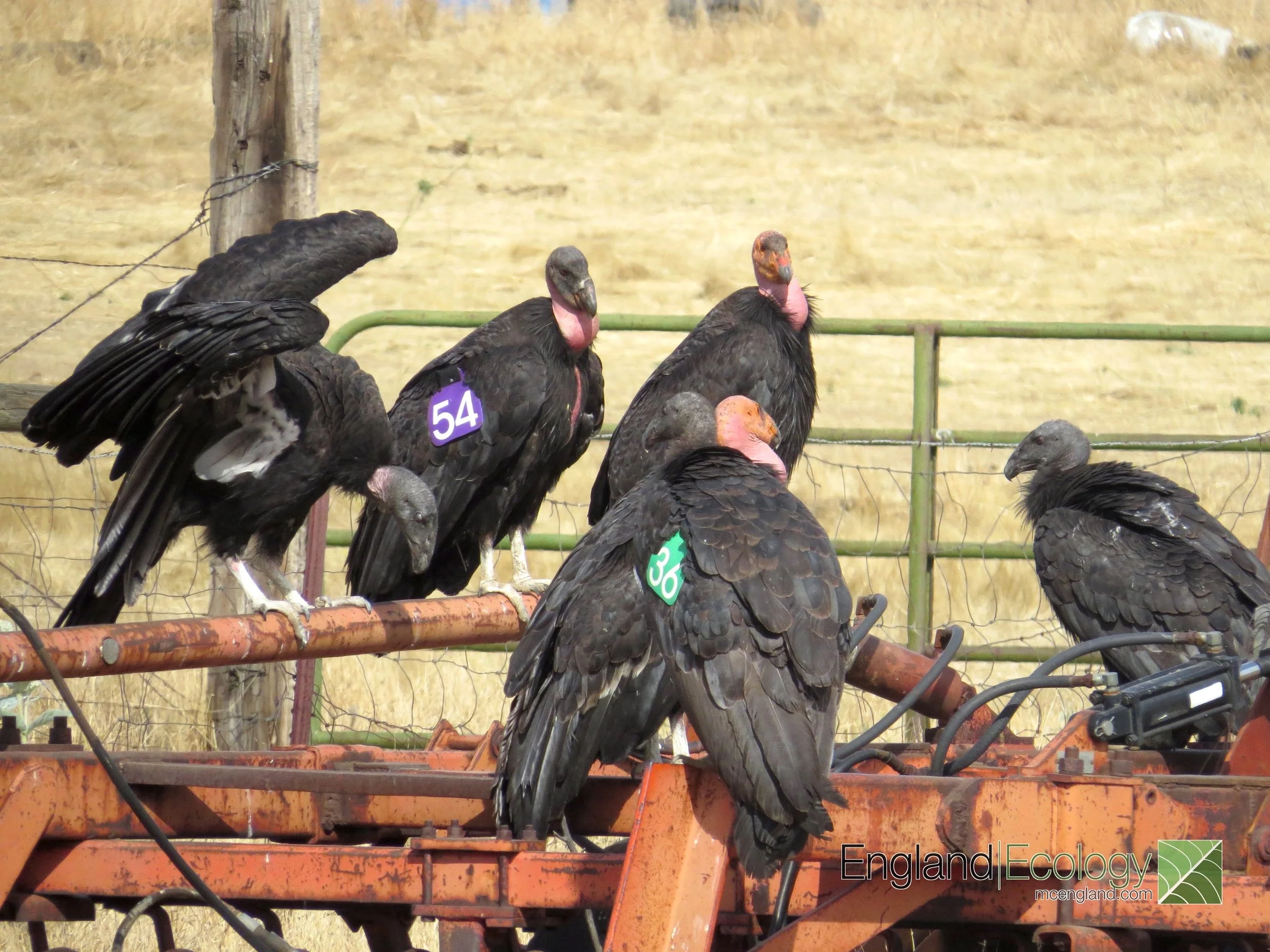
A roost of endangered California Condors on a farm in the Tehachapi Mountains. Photo by Marcus C. England of England|Ecology, taken June 9, 2016.
Why is this Important?
As noted by Nossaman LLP “ESA section 9 prohibits ‘take’ of species listed as endangered, which is defined as, among other things, to ‘harm’ such species. The Services’ respective definitions of ‘harm’ have long been the primary mechanism by which the agencies regulate activities that modify ESA-listed species’ habitats.”
It is unclear what this will mean, ultimately, for how the ESA is implemented. A key passage in the Federal Register notice is as follows:
The rescission of the regulatory definition of “harm” does not limit the Services' ability to assess impacts to listed species and critical habitat from all components of the action agency's proposed action through the section 7 process. Yet, imposing the current incidental take regime on activities beyond those authorized by the statute is not an appropriate option that the Services believes they should avail themselves of (even if it were permissible under Loper Bright's dicta regarding the statutory-stare-decisis value of prior cases), given the executive branch's duty to see that the laws are faithfully executed. What commenters are suggesting is, in short, that we continue to subject a swath of activities to the incidental-take regime, which otherwise would not be subject to this regime on the best reading of the statute, simply because that would allow the Services to better monitor and accomplish some other goal, i.e., monitoring and limiting true “harm.” The Services reject this invitation as not being a proper implementation of the law, because it would impose burdens on the citizenry that are not authorized by statute.
Later, the FWS and NMFS state:
The rescission of the definition of “harm” intends to align the implementation of the Act with the single, best reading of the statute by making clear that habitat modification or degradation does not qualify as “take.”
As of this writing, lawsuits have already been filed against the federal government over this determination. Project-specific lawsuits related to how this is implemented will almost certainly occur.