
Bald and Golden Eagle Protection Act
Note: the following text is England|Ecology’s standard legal text used for biological reports. The primary purpose of this text’s existence on this website is to provide a landing page for hyperlinks in footnotes in smaller documents, where there may not be adequate space for explanations of the laws and policies that underpin the report.
The Bald and Golden Eagle Protection Act (BGEPA) (16 U.S.C. 668-668c), enacted in 1940, and amended several times since then, prohibits anyone, without a permit issued by the Secretary of the Interior, from "taking" eagles, including their parts, nests, or eggs. The Act provides criminal penalties for persons who "take, possess, sell, purchase, barter, offer to sell, purchase or barter, transport, export or import, at any time or any manner, any bald eagle ... [or any golden eagle], alive or dead, or any part, nest, or egg thereof." The Act defines "take" as "pursue, shoot, shoot at, poison, wound, kill, capture, trap, collect, molest or disturb." For purposes of the guidelines, "disturb" means: “to agitate or bother a bald or golden eagle to a degree that causes, or is likely to cause, based on the best scientific information available, 1) injury to an eagle, 2) a decrease in its productivity, by substantially interfering with normal breeding, feeding, or sheltering behavior, or 3) nest abandonment, by substantially interfering with normal breeding, feeding, or sheltering behavior." In addition to immediate impacts, this definition also covers impacts that result from human-induced alterations initiated around a previously used nest site during a time when eagles are not present, if, upon the eagle's return, such alterations agitate or bother an eagle to a degree that interferes with or interrupts normal breeding, feeding, or sheltering habits, and causes injury, death, or nest abandonment.
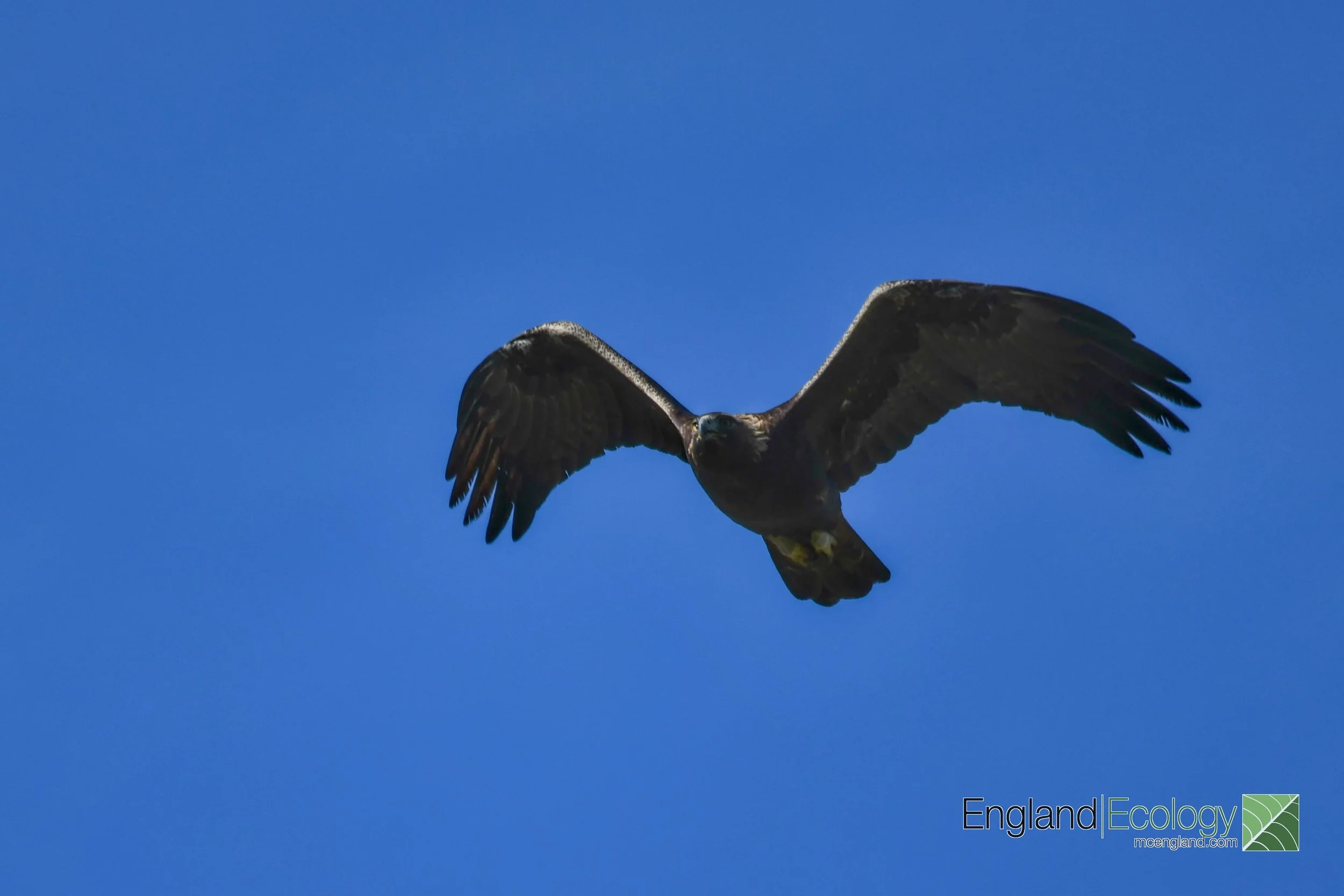
Golden Eagle (Aquila chrysaetos). Photo by Marcus C. England of England|Ecology.