
California Environmental Quality Act
Note: the following text is England|Ecology’s standard legal text used for biological reports. The primary purpose of this text’s existence on this website is to provide a landing page for hyperlinks in footnotes in smaller documents, where there may not be adequate space for explanations of the laws and policies that underpin the report.
Appendix G of the CEQA Guidelines is used by public agencies to determine whether a project may have a significant impact on biological resources. Under Appendix G (Section IV), a project may have a significant impact on biological resources if it would:
Have a substantial adverse effect, either directly or through habitat modification, on any species identified as a candidate, sensitive, or special status species in local or regional plans, policies, or regulations by the CDFW or USFWS.
Have a substantial adverse effect on any riparian habitat or other sensitive natural community identified in the City or regional plans, policies, or regulations by the CDFW or USFWS.
Have a substantial adverse effect on federally protected wetlands as defined by Section 404 of the Clean Water Act (including, but not limited to, marsh, vernal pool, coastal, etc.) through direct removal, filling, hydrological interruption, or other means.
Interfere substantially with the movement of any native resident or migratory fish or wildlife species or with established native resident or migratory wildlife corridors, or impede the use of native wildlife nursery sites.
Conflict with any local policies or ordinances protecting biological resources, such as tree preservation policy or ordinance (e.g., oak trees or California walnut woodlands).
Conflict with the provisions of an adopted Habitat Conservation Plan, Natural Community Conservation Plan, or other approved local, regional, or state habitat conservation plan.
In addition, Section 15065(a) of the CEQA Guidelines establishes that a significant impact may occur if "[t]he project has the potential to substantially degrade the quality of the environment, substantially reduce the habitat of a fish and wildlife species, cause a fish or wildlife population to drop below self-sustaining levels, threaten to eliminate a plant or animal community, [or] reduce the number or restrict the range of an endangered, rare or threatened species.”
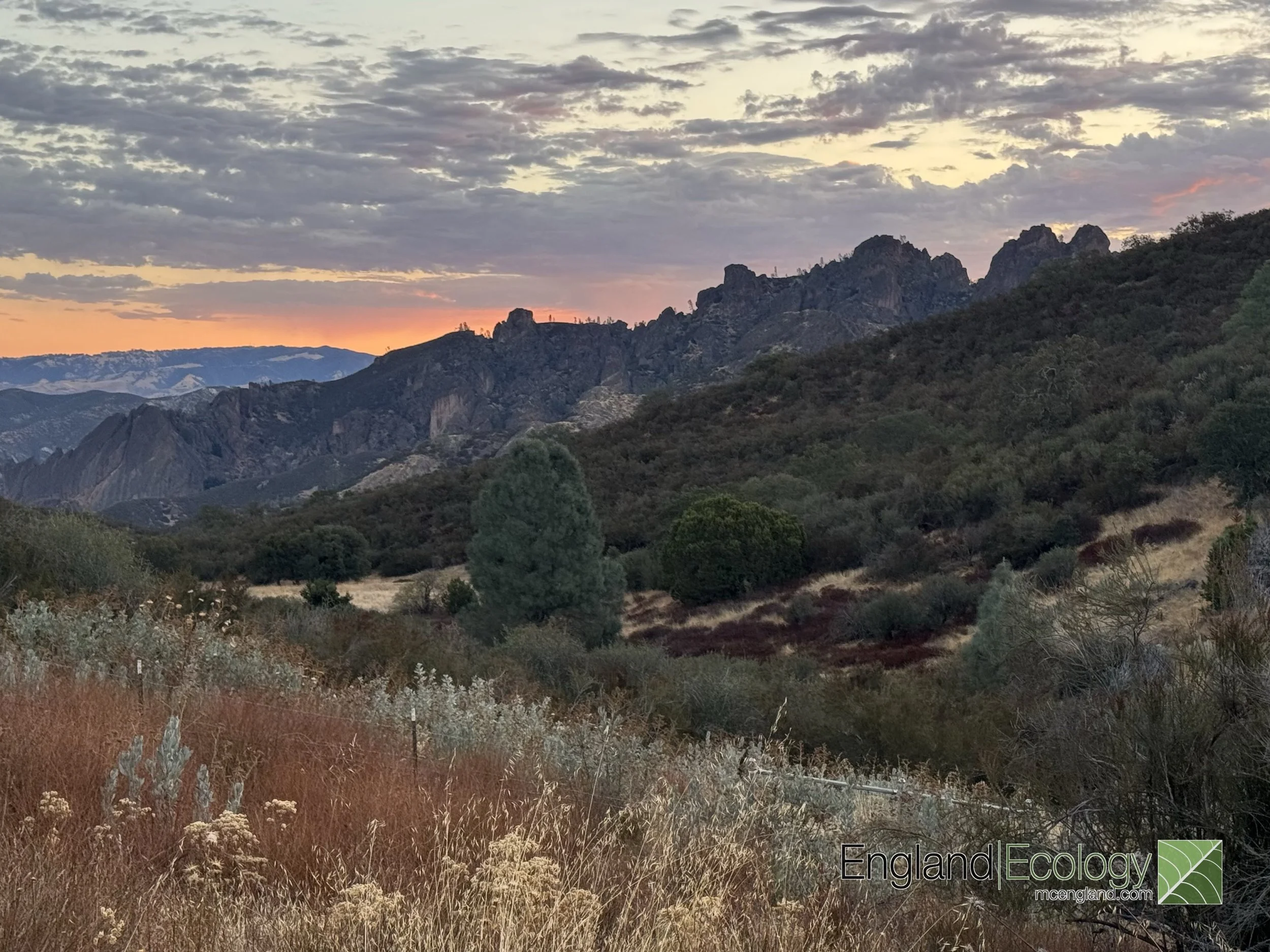
Sunrise at Pinnacles National Park. Photo by Marcus C. England of England|Ecology.