
Taxonomy & Nomenclature
Note: the following text is England|Ecology’s standard methods text used for biological reports. The primary purpose of this text’s existence on this website is to provide a landing page for hyperlinks in footnotes in smaller documents, where there may not be adequate space for explanations of the methods that underpin the report.
It is important within a given report to use a consistent taxonomy for clarity in communication, especially as the various sources used in the research for a report may not use the same taxonomy and nomenclature. England|Ecology maintains its own regularly-updated taxonomic databases, with the taxonomic reference varying by major taxonomic group. For invertebrates, fishes, and mammals, the primary reference is NatureServe. The plants list hybridizes NatureServe and the Jepson eFlora. For amphibians and reptiles, the primary reference is the California Herps website. For birds, the primary reference is the American Ornithological Society.
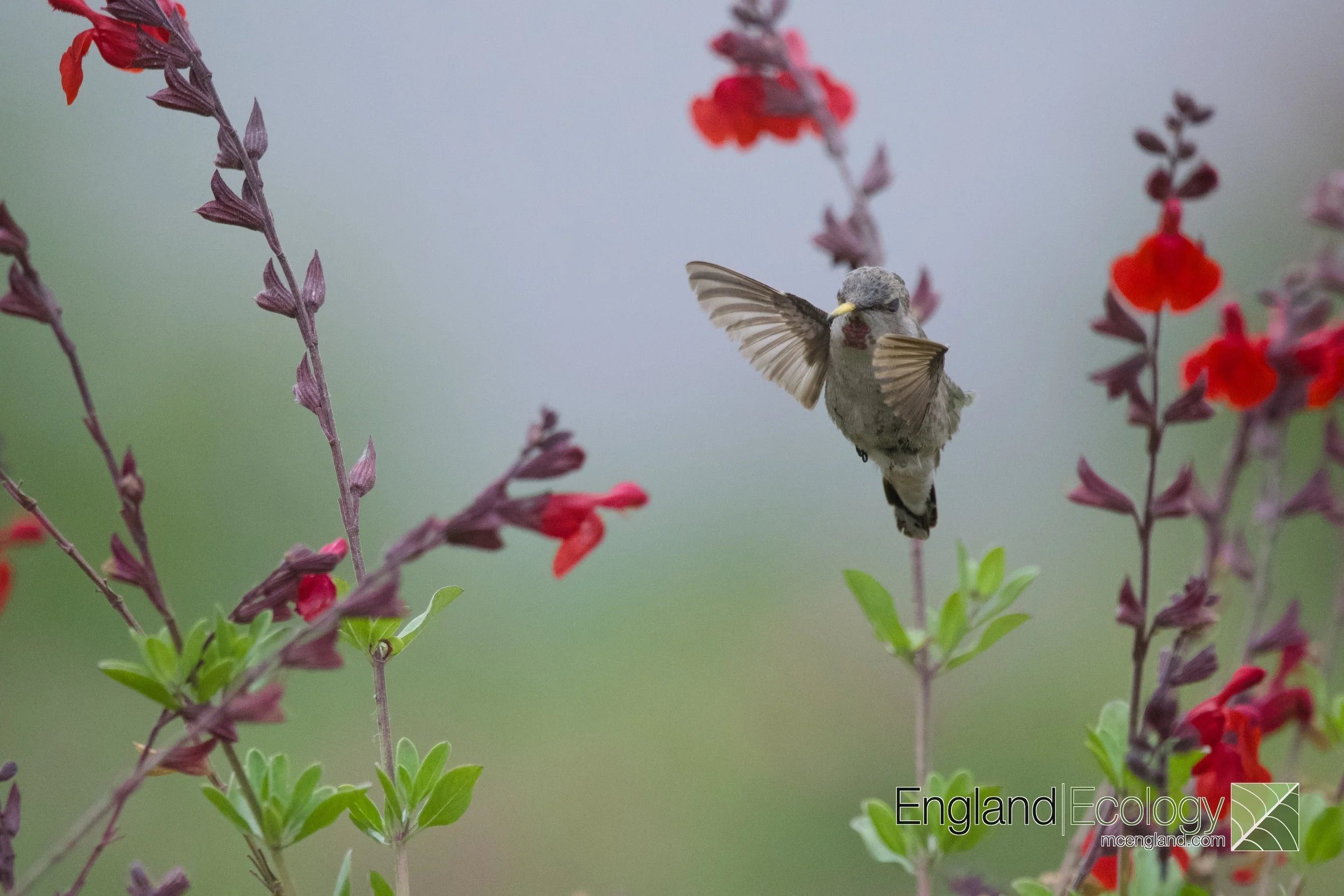
Photo by Marcus C. England of England|Ecology.