
Federal Endangered Species Act
Note:the following text is England|Ecology’s standard legal text used for biological reports. The primary purpose of this text’s existence on this website is to provide a landing page for hyperlinks in footnotes in smaller documents, where there may not be adequate space for explanations of the laws and policies that underpin the report.
The Federal Endangered Species Act (FESA) is the federal government’s tool to protect rare and declining plant and wildlife species. It is implemented jointly by the US Fish and Wildlife Service (USFWS, terrestrial species) and the National Marine Fisheries Service. FESA protects species using the following status designations:
An Endangered (FE) species is a species of invertebrate, plant, or wildlife formally listed under FESA as facing extinction throughout all or a significant portion of its geographic range.
A Threatened (FT) species is a species of invertebrate, plant, or wildlife formally listed under FESA as likely to become endangered within the foreseeable future throughout all or a significant portion of its range.
A Proposed Threatened (FPT) or Proposed Endangered (FPE) species is one officially proposed for addition to the federal threatened or endangered species lists. A Candidate (FC) species is one under review for listing, often due to the submittal of a petition by an outside entity.
"Take" of a federally endangered or threatened species or its habitat is prohibited by federal law without a special permit. The term "take", under FESA, means to harass, harm, pursue, hunt, shoot, wound, kill, trap, capture, or collect, or to attempt to engage in such conduct. “Harm” is defined to encompass "an act which actually kills or injures wildlife. Such an act may include significant habitat modification or degradation where it actually kills or injures wildlife by significantly impairing essential behavioral patterns, including breeding, feeding or sheltering" (50 CFR 17.3), though this regulatory definition of “harm” was rescinded on July 14, 2026.
FESA also requires the USFWS to consider whether there are areas of habitat essential to conservation for each listed species. Critical Habitat (CH) designations protect these areas, including habitat that is currently unoccupied but may be essential to the recovery of a species. An area is designated as critical habitat after the USFWS publishes a proposed Federal regulation in the Federal Register and then receives and considers public comments on the proposal. The final boundaries of critical habitat are officially designated when published in the Federal Register.
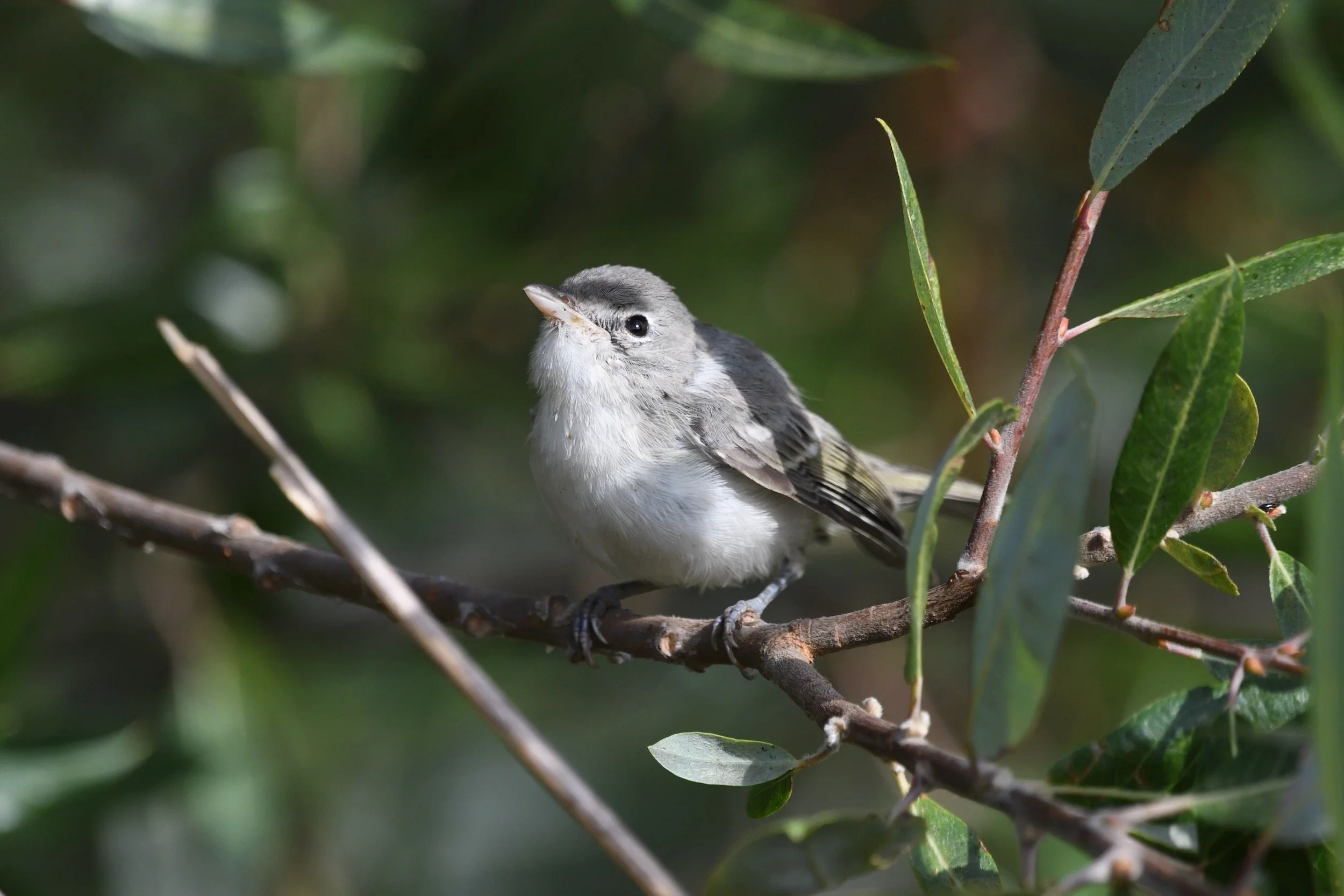
The Least Bell’s Vireo (Vireo bellii pusillus) is listed as Endangered under the Federal Endangered Species Act. Photo by Marcus C. England of England|Ecology.